Call us now :08045477715
 Send Inquiry
 Send Inquiry
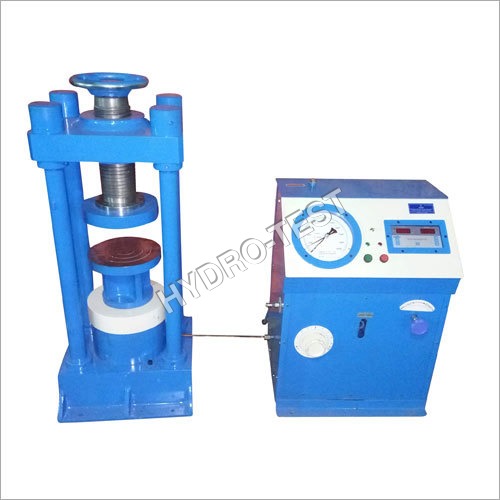
Hydraulic Compression Testing Machine
MOQ : 1 Piece
Hydraulic Compression Testing Machine Specification
- Accuracy
- 1% of indicated load %
- Power Supply
- Electric
- Voltage
- 220-240V Volt (v)
- Display Type
- Analog/Digital Gauge (as per model)
- Product Type
- Hydraulic Compression Testing Machine
- Load Power
- Manual/Automatic (as per model)
- Speed Range
- 0-5 mm/min
- Stroke
- 50 mm
- Weight
- Approx 180-220 kg Kilograms (kg)
- Dimension (L*W*H)
- 800 x 480 x 1000 mm Millimeter (mm)
- Features
- Highly rigid construction, easy to operate, high accuracy, low maintenance
- Frequency
- 50 Hz Hertz (HZ)
- Capacity
- 1000 kN (100 Ton) Ton
- Usage & Applications
- Testing compressive strength of concrete/cement specimens
- Phase
- Single Phase
- Frame Type
- Four Column Floor Mounted
- Control Mode
- Hydraulic (Manual/Automatic)
- Color
- Blue & Grey
- Automation Grade
- Semi-Automatic
- Max Platen Clearance
- 320 mm
- Operating Method
- Hand Operated Pump/ Motorized (as per configuration)
- Accessories Provided
- Spacer Blocks, Calibration Certificate, Oil Filling
- Oil Capacity
- 2.5 Liters
- Surface Finish
- Powder Coated
- Material
- Mild Steel Body
- Piston Diameter
- 165 mm
- Operating Temperature
- +5C to +55C
- Grip Type
- Adjustable Platen for Various Specimen Sizes
- Platen Size
- 222 mm diameter
- Safety Features
- Overload protection valve
Hydraulic Compression Testing Machine Trade Information
- Minimum Order Quantity
- 1 Piece
- Supply Ability
- 50 Pieces Per Month
- Delivery Time
- 1 Week
- Sample Available
- Yes
- Sample Policy
- Contact us for information regarding our sample policy
- Packaging Details
- Wooden boxes
- Main Export Market(s)
- Asia
- Main Domestic Market
- All India
Hydraulic Compression Testing Machine About
As an acclaimed enterprise of the industry, we are engaged in manufacturing and supplying Hydraulic Compression Testing Machine. These machines are ,manufactured under the strict inspection of expert supervisors using high quality cast iron and mild steel. These machines find application in cement testing laboratory and civil engineering works. We can customize these Hydraulic Compression Testing Machines for clients in different technical specification as per their requirements. Also, we offer these machines at cost effective prices.Features:
- Robust construction
- High working efficiency
- Accurate measurements
Precision and Safety Combined
Designed with a sturdy four-column frame and overload protection valve, this compression testing machine provides secure, accurate, and repeatable measurements. The highly rigid construction minimizes deformations during heavy tests, ensuring operator safety and consistent results even in demanding laboratory environments.
Versatile and Efficient Testing Solutions
With adjustable platens and a maximum clearance of 320 mm, the machine accommodates a variety of specimen sizes. The semi-automatic hydraulic operationmanual or motorizedensures flexibility, while its low maintenance requirements and intuitive controls allow for efficient, hassle-free testing.
Supplied Complete for Immediate Use
Each unit includes essential accessories such as spacer blocks, a calibration certificate, and pre-filled hydraulic oil. The machine is easy to install and operate, with a powder-coated finish for lasting durability and minimal upkeep, suitable for both educational and professional material testing applications.
FAQs of Hydraulic Compression Testing Machine:
Q: How does the hydraulic compression testing machine operate?
A: The machine uses a hydraulic system, operated either by a hand pump or a motorized option depending on configuration, to apply compressive force to concrete or cement specimens between platens. The load applied can be monitored using either a precision analog gauge or a digital indicator.Q: What types of specimens can this machine test?
A: With its adjustable platen and 320 mm maximum clearance, the machine is suitable for various sizes of concrete or cement specimens, making it versatile for different testing standards and research applications.Q: When should the machine be calibrated?
A: Calibration is recommended prior to initial use and at regular intervals per laboratory protocols or after any major maintenance. Each unit comes with a calibration certificate for quality assurance.Q: Where is this compression testing machine typically used?
A: It is widely installed in construction material testing laboratories, research institutes, educational settings, and quality control departments across India, wherever accurate compressive strength evaluation is essential.Q: What is the process for conducting a compression test using this equipment?
A: Place the prepared specimen between the platens, set the necessary adjustments, and activate the hydraulic system. Incrementally apply force until the specimen fails, and record the maximum load using the gauge or digital display. Spacer blocks can be used for shorter specimens.Q: What are the key benefits of using this machine?
A: Users benefit from high accuracy (1% of indicated load), robust safety features, versatile specimen handling, easy operation, and low maintenance. The powder-coated mild steel frame ensures durability, while automation and display options provide tailored testing solutions.Q: Can the machine accommodate both manual and automatic testing?
A: Yes, depending on the selected configuration, the machine supports both manual operation via hand pump and automatic operation via an electric motor, providing flexibility for different laboratory requirements.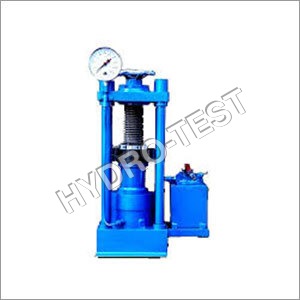
Tell us about your requirement

Price:
Quantity
Select Unit
- 50
- 100
- 200
- 250
- 500
- 1000+
Additional detail
Mobile number
Email

More Products in Compression Testing Machines Category
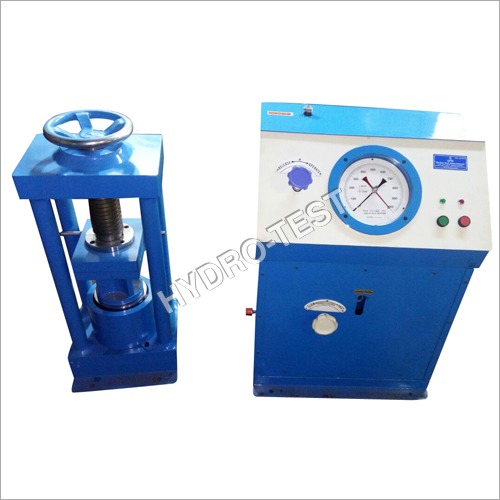
Industrial Compression Testing Machines
Price Range 25000.00 - 250000.00 INR / Piece
Minimum Order Quantity : 1 Piece
Product Type : Industrial Compression Testing Machine
Usage & Applications : Testing compressive strength of cement, concrete, bricks, and other building materials
Features : High load capacity, robust frame, digital display, precise control
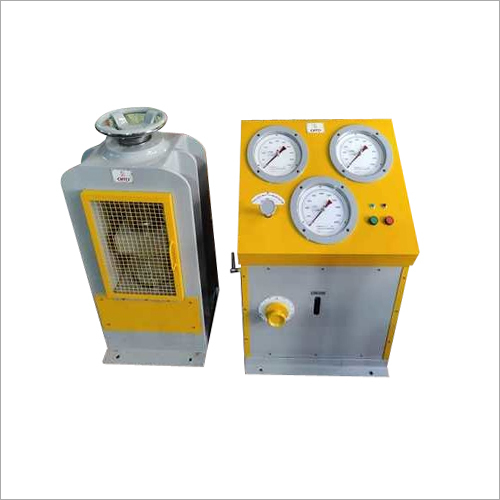
Compression Testing Machine
Price 110000 INR / Piece
Minimum Order Quantity : 1 Piece
Product Type : Compression Testing Machine
Usage & Applications : Determining compressive strength of concrete specimen
Features : Heavy Duty Construction, Overload Protection, Easy to Operate
Cube Testing Machine
Price 25000 INR / Piece
Minimum Order Quantity : 1 Piece
Product Type : Pillar Nut Model Machine
Usage & Applications : Threading and forming pillar nuts
Features : Sturdy construction, low maintenance, high precision, adjustable stroke

Welded Model Machine
Price Range 25000.00 - 250000.00 INR / Piece
Minimum Order Quantity : 1 Piece
Product Type : Welded Model Machine
Usage & Applications : Industrial Welding, Sheet Metal Fabrication
Features : High Durability, Robust Design, Low Maintenance, Energy Efficient

 Send Inquiry
Our Products


plot No. M-28, Street No.8, Anand Parbat Industrial Area, New Rohtak Road, New Delhi - 110005, India

Mr. SONU SHARMA
(Proprietor)
Mobile :08045477715
 Send Inquiry
 Send SMS
 Call Me Free
Developed and Managed by Infocom Network Private Limited.


