
Call us now :08045477715
 Send Inquiry
 Send Inquiry
Beam Mould
MOQ : 1 Piece
Beam Mould Specification
- Automation Grade
- Manual
- Accuracy
- Precision machining as per IS Standards
- Max Height
- 150 mm (standard mould)
- Mounting Type
- Base Mount
- Equipment Type
- Beam Mould
- Specimen Size
- 150 mm x 150 mm x 700 mm (standard), 100 mm x 100 mm x 500 mm (optional)
- Number of Specimens
- 1 unit per mould
- Hardness
- High structural strength (Cast Iron/Steel construction)
- Application
- Laboratory, Industrial, Construction Material Testing
- Usage
- Industrial
- Features
- Heavy-duty, corrosion resistant, rigid fabrication, detachable base and sides, leak-proof joints
- Capacity
- For concrete beam casting
- Machine Weight
- Approx. 8-12 kg (depending on size and material)
- Control Mode
- Manual
- Construction Material
- Cast Iron/Steel
- End Fastening
- Fitted with strong hardware for tight closure
- Side Edition
- Side plates and base fitted with firm capping for leak-proof performance
- Maintenance
- Easy to clean and maintain
- Surface Type
- Smooth, machined finish for accurate sample formation
- Mould Type
- Three-part or Four-part construction (as per requirement)
- Finish
- Machined surface, painted or powder-coated
- Reusability
- Suitable for repeated usage
Beam Mould Trade Information
- Minimum Order Quantity
- 1 Piece
- Supply Ability
- 50 Pieces Per Month
- Delivery Time
- 1 Week
Beam Mould About
We are the manufacturer of Beam mould which are used to prepare concrete specimens for flexural testing of concrete beams.
Product Specification :
| Material | - MS |
| Size - | 150x500x500 |
| Weight - | 14kg |
| Color - | blue |
| Brand - | Hydro Test Instrument |
| Height | 150MM |
Durable Construction for Precision Testing
Crafted from cast iron or steel, the Beam Mould boasts a rigid, corrosion-resistant body, ensuring longevity and structural integrity even under frequent use. The machined surface delivers precise beam formation, which is critical for accurate construction material testing in laboratories and industrial environments. Its detachable base and sides facilitate simple assembly, cleaning, and maintenance.
Leak-Proof Performance and Easy Handling
Firm capping, robust end fasteners, and precision engineering result in leak-proof joints, maintaining the integrity of test specimens throughout the casting process. The mould's ergonomic design supports seamless manual operation while the base mount enhances stability. Suitable for repeated use, it meets high standards required in quality control and research applications.
FAQ's of Beam Mould:
Q: How is the Beam Mould used in concrete casting and material testing?
A: The Beam Mould is employed to shape and form concrete into standardized test beams, which are then cured and evaluated for structural properties such as strength and durability. Simply assemble the mould, pour in the concrete mix, ensure firm closure of the sides and base, and allow it to set. Post-curing, the sample can be easily demoulded for further testing.Q: What makes this Beam Mould suitable for repeated industrial use?
A: Its construction from high-strength cast iron or steel, corrosion-resistant finish, and heavy-duty fastening hardware ensure durability and consistency even with frequent use. The smooth, precision-machined surfaces allow for easy cleaning and accurate specimen formation, making it ideal for repeated laboratory and industrial testing cycles.Q: When should a three-part or four-part Beam Mould be selected?
A: The choice between three-part and four-part moulds depends on testing requirements and ease of demoulding. Four-part moulds often facilitate easier handling and removal of delicate specimens, especially for larger beams, while three-part moulds are suitable for standard applications with moderate specimen size requirements.Q: Where is the Beam Mould typically utilized?
A: This mould is used in laboratories, industrial quality control settings, and construction material testing facilities throughout India. Its compliance with IS Standards ensures adaptability to a variety of test protocols involving concrete beam specimens.Q: What benefits does the machined finish provide for concrete beam formation?
A: A smooth, machined finish creates a uniform mold cavity, ensuring accurate dimensions and surface quality in the concrete test beams. This results in reliable test outcomes and reproducible specimen properties, which are vital for research, development, and quality assurance.Q: How can the Beam Mould be maintained to ensure longevity?
A: Routine cleaning after each use, along with checking and tightening fasteners, preserves the mould's leak-proof performance and precision fit. The corrosion-resistant finish requires only basic care, making maintenance straightforward and time-efficient.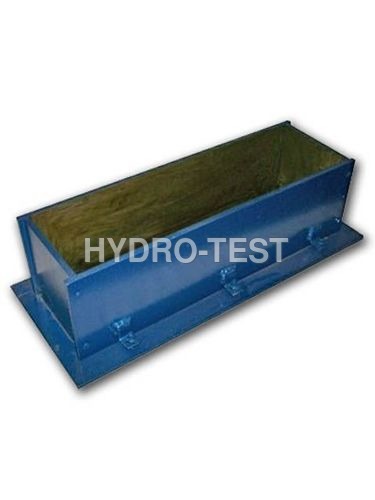
Tell us about your requirement

Price:
Quantity
Select Unit
- 50
- 100
- 200
- 250
- 500
- 1000+
Additional detail
Mobile number
Email


 Send Inquiry
Our Products


plot No. M-28, Street No.8, Anand Parbat Industrial Area, New Rohtak Road, New Delhi - 110005, India

Mr. SONU SHARMA
(Proprietor)
Mobile :08045477715
 Send Inquiry
 Send SMS
 Call Me Free
Developed and Managed by Infocom Network Private Limited.


