
Call us now :08045477715
 Send Inquiry
 Send Inquiry
Slump Test Apparatus
MOQ : 1 Bottle
Slump Test Apparatus Specification
- Features
- Corrosion resistant, sturdy construction, easy to use
- Response Time
- Instantaneous/manual reading
- Power Supply
- Not Required (Manual)
- Temperature
- Ambient
- Resolution
- 1 mm
- Equipment Type
- Slump Test Apparatus
- Automation Grade
- Manual
- Hardness
- Mild Steel with powder coating
- Mounting Type
- Portable / Tabletop
- Measuring Range
- 0-200 mm
- Specimen Size
- Diameter: 100 mm (top), 200 mm (base), Height: 300 mm (cone)
- Max Height
- 300 mm (cone height)
- Humidity
- Ambient
- Accuracy
- 1 mm
- Test Range
- 0-200 mm (slump measurement)
- Usage
- Industrial
- Application
- For determining consistency/workability of fresh concrete
- Number of Specimens
- 1 per test
- Capacity
- Single cone test
- Machine Weight
- Approx. 5 kg
- Test Speed
- Manual operation
- Test Width
- 200 mm (Base Plate)
- Control Mode
- Manual
- Finish
- Powder coated or galvanized
- Base Plate Dimensions
- 250 mm 250 mm approx.
- Handle Type
- Fitted, heavy-duty handles on cone
- Standards Compliance
- IS 1199, ASTM C143, BS EN 12350-2
- Included Accessories
- Slump cone, base plate, tamping rod, cleaning brush
- Colour
- Blue or customized as per requirement
- Marking
- Graduated ruler/scale for slump measurement
- Tamping Rod Size
- 16 mm diameter 600 mm length
- Material of Construction
- Mild Steel/Brass (handles and base plate)
- Cone Wall Thickness
- 1.5 mm - 2 mm
Slump Test Apparatus Trade Information
- Minimum Order Quantity
- 1 Bottle
- Supply Ability
- 50 Bottles Per Month
- Delivery Time
- 1 Week
- Main Domestic Market
- All India
Slump Test Apparatus About
The Slump Cone apparatus for conducting the slump test essentially consists of a metallic mould in the form of a frustum of a cone having the internal dimensions as : Bottom diameter : 20 cm, Top diameter : 10 cm, Height : 30 cm and the thickness of the metallic sheet for the mould should not be thinner than 1.6 mm.Engineered for Reliable Concrete Testing
Manufactured using robust mild steel or brass, and finished with powder coating or galvanization, the Slump Test Apparatus offers longevity and exceptional corrosion resistance. Its ergonomic handles and stable base plate design support both ease of use and safety during workability tests, ensuring accurate and repeatable results every time.
Comprehensive Accessories for Precise Measurement
The kit includes a slump cone with heavy-duty handles, a graduated ruler/scale for precise slump detection, a 16 mm x 600 mm tamping rod, a large 250 mm base plate, and a practical cleaning brush. Each component is constructed for consistency with standards and can withstand rigorous industrial use.
User-Friendly and Portable Operation
Featuring a manual, non-electric operation, this apparatus is fully portable and ideal for field or laboratory testing. Its compact, 5 kg design, along with ambient temperature and humidity compatibility, enables quick deployment wherever concrete quality assessment is required.
FAQ's of Slump Test Apparatus:
Q: How is the Slump Test Apparatus used in concrete testing?
A: The apparatus is utilized to assess the consistency and workability of fresh concrete. Freshly mixed concrete is filled into the slump cone in three layers, each tamped with the supplied rod. After the cone is lifted vertically, the change in concrete height (slump) is measured using the graduated ruler, indicating its workability.Q: What materials are used in the construction of the Slump Test Apparatus?
A: The main body is crafted from sturdy mild steel or brass, with powder coated or galvanized finishes for increased durability. The handles and base plate are also made from robust metal, ensuring long-term, corrosion-resistant performance.Q: When should a slump test be performed during the construction process?
A: A slump test should be conducted immediately after fresh concrete is mixed and prior to placement to ensure it meets the specified workability and consistency standards required for your project.Q: Where can the Slump Test Apparatus be used?
A: This apparatus is designed for both laboratory environments and on-site industrial locations. Its portable nature allows for quick setup wherever fresh concrete workability assessment is needed.Q: What is the process for conducting a slump test with this apparatus?
A: The process involves filling the slump cone in layers, tamping each with the rod, and then carefully lifting the cone. The resulting slump value is measured using the attached scale. The entire procedure is manual, ensuring immediate results without the need for electrical power.Q: What are the key benefits of using this apparatus for slump testing?
A: It delivers rapid, accurate, and repeatable results, is easy to operate, highly portable, and resistant to corrosion. Its compliance with international standards assures reliability for concrete quality control.Q: How accurate are the results from this apparatus, and what is its measuring range?
A: The Slump Test Apparatus offers a measuring range of 0-200 mm for slump measurement, with an accuracy and resolution of 1 mm, allowing for precise assessment of concrete workability.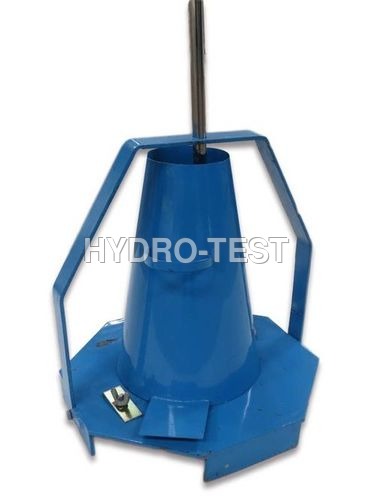
Tell us about your requirement

Price:
Quantity
Select Unit
- 50
- 100
- 200
- 250
- 500
- 1000+
Additional detail
Mobile number
Email


 Send Inquiry
Our Products


plot No. M-28, Street No.8, Anand Parbat Industrial Area, New Rohtak Road, New Delhi - 110005, India

Mr. SONU SHARMA
(Proprietor)
Mobile :08045477715
 Send Inquiry
 Send SMS
Developed and Managed by Infocom Network Private Limited.


